
Landmark addresses
Ciputra Hanoi: a buyer's guide
What is Ciputra Hanoi and can foreigners buy there?
Ciputra Hanoi at a glance
Township- Developer
- Citra Westlake City Development Co., Ltd.
- Joint venture: Ciputra Group (Indonesia) and UDIC (Hanoi)
- Launched
- MOU 1995 · Phase 1 groundbreaking Nov 2002
- Multi-phase build-out across the 2000s–2010s
- Scale
- 301 hectares
- Includes roughly 77 hectares of parks, lakes and boulevards
- District
- Tây Hồ / Bắc Từ Liêm border
- Wards Xuân La, Phú Thượng, Xuân Đỉnh and Đông Ngạc
- Property types
- High-rise apartment towers and landed villas
- ~12 towers (G, E, P and L blocks) plus 25+ villa sub-zones
- Apartment stock
- Roughly 2,000 units across the named towers
- Villa count is not publicly disclosed by the developer
- Foreign ownership
- 50-year renewable tenure · 30% quota per apartment tower
- Locked legal facts — Housing Law 2023 / Land Law 2024
- Community
- 7,000+ residents, 30.8% foreign nationals from 74 countries
- One of Hanoi's longest-established international communities
- Current prices
- See live medians and listings below
- Updated from active Tây Hồ listings
Ciputra Hanoi apartments: a pioneer international township
A pioneer among Hanoi's international townships
Ciputra Hanoi — officially Ciputra Hanoi International City, part of the wider Nam Thăng Long urban development — was one of the first large-scale, foreign-invested townships built in the Vietnamese capital. The project traces back to a 1995 memorandum between Indonesia's Ciputra Group and Hanoi's municipal development arm, UDIC, with the first phase breaking ground in November 2002. More than two decades on, it remains a reference point for what a fully master-planned community looks like in Hanoi — well before Vinhomes and other domestic groups scaled up the same township model on the city's edges.
Towers, villas and an unusually low-density layout
The 301-hectare site — including roughly 77 hectares of parks, lakes and tree-lined boulevards — sits on the northwest shore of West Lake (Hồ Tây), straddling wards in Tây Hồ and Bắc Từ Liêm districts. It combines around a dozen high-rise apartment towers (the G02/G03, E1/E4/E5, P1/P2 and L1–L5 clusters) with more than twenty low-rise villa sub-zones. That dual format — condominiums for buyers who want lock-and-leave simplicity, villas for those who want a garden and more space — is unusual among Hanoi's newer townships, which tend to be almost entirely high-rise. Main access runs via Lạc Long Quân street and Ring Road 2 (Võ Chí Công), toward Nhật Tân Bridge and Nội Bài Airport.
An established, genuinely international community
Ciputra Hanoi is home to more than 7,000 residents, of whom close to a third are foreign nationals from some 74 countries — one of the longest-running and most diverse expat communities in the city. Three well-known international schools sit inside or immediately adjacent to the township — United Nations International School Hanoi (UNIS), Singapore International School (SIS) Ciputra and Hanoi Academy (HAS) — alongside a clubhouse, retail centre and golf-adjacent grounds. For a foreign buyer weighing Ciputra against newer, brand-name townships, the trade-off is straightforward: fewer of the latest fit-out standards, in exchange for mature landscaping, an established school run and a resident community that has been there for two decades rather than two years.
How Ciputra compares with buying elsewhere in Tây Hồ
Most of Tây Hồ's newer stock is either a standalone high-rise tower or a serviced-apartment block with no on-site schooling and a smaller, more transient resident base. Ciputra's advantage is scale: because it is a self-contained township rather than a single building, residents get walkable retail, a clubhouse, mature trees and three international schools without leaving the compound — closer in feel to a mega-township like Vinhomes Ocean Park than to a single Tây Hồ tower, but positioned inside the district rather than on the city's outer ring. The cost of that convenience is age: buyers should expect to renovate kitchens and bathrooms in older blocks, and to compare unit-by-unit condition carefully rather than assume a uniform standard across the 12 towers. Current asking prices and unit condition are best checked against the live listings below, tower by tower, rather than against any single township-wide figure.
Getting around and daily life
Ciputra's internal road network and lakeside paths make it genuinely walkable within the compound, with a retail centre, supermarket and clubhouse serving daily needs. For journeys beyond the gates, Lạc Long Quân street and Ring Road 2 (Võ Chí Công) connect directly to the rest of Tây Hồ, the Nhật Tân Bridge crossing to Long Biên, and onward to Nội Bài Airport — useful for residents who travel frequently or commute to industrial parks north of the Red River. The trade-off, as with most self-contained townships, is that the historic centre and the lake-facing cafés of central Tây Hồ are a drive rather than a walk away.
Verifying quota and title before you commit
Because Ciputra spans 12 apartment towers and more than twenty villa sub-zones built over two decades, the foreign-ownership quota should be checked at the level of the specific tower or ward you are buying into, not assumed for the township as a whole — a tower nearing its 30% cap will not accept a new foreign buyer even if neighbouring towers still have headroom. The same applies to the 250-house-per-ward cap on villas. Both figures move over time as owners sell to Vietnamese nationals or as new foreign buyers enter, so treat any figure you're quoted as a snapshot to be reconfirmed at the land registration office, not a fixed allocation. This single check is the most consequential piece of due diligence at a multi-phase township like Ciputra.
The paperwork: from reservation to Pink Book
Whether you buy from the developer's remaining inventory or on resale, the practical steps are the same as elsewhere in Hanoi: a reservation, a Sale & Purchase Agreement (SPA), and — for any unit still under a developer payment schedule — confirmation that a bank guarantee is in place before you pay a deposit. Ownership is then registered on the Pink Book (Sổ hồng), under the renewable 50-year tenure set out in the Housing Law 2023 — see our guide to renewing the 50-year term for what extension involves in practice. The underlying land, in every case, stays outside foreign ownership under the Land Law 2024, whether you buy an apartment or a villa. Running these checks — plus confirming the seller's identity against the Pink Book — is the kind of due diligence a local lawyer should handle on your behalf; once you have taken possession, day-to-day matters from service charges to the owners' general assembly are typically handled through professional property management.
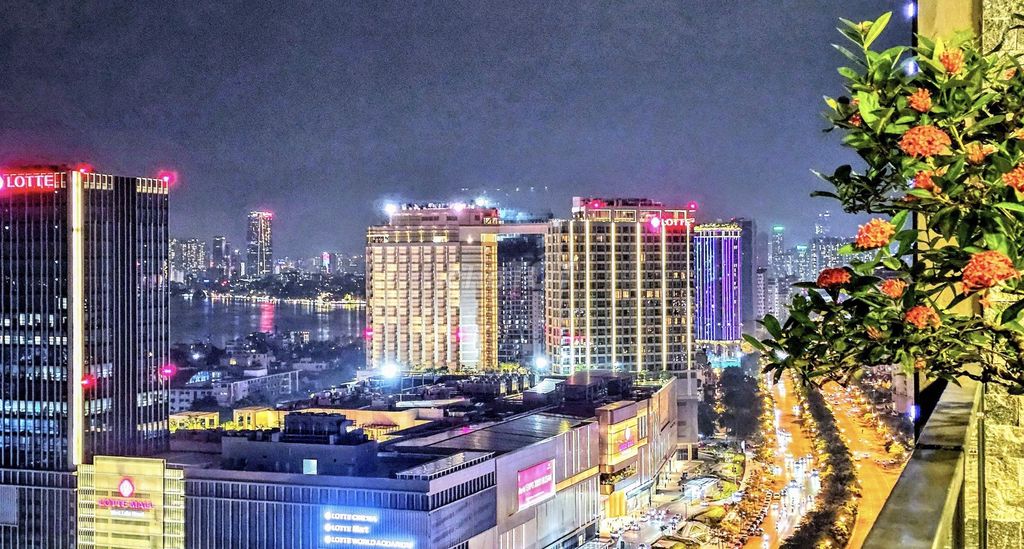
Units for sale in the Tây Hồ area, including Ciputra Hanoi

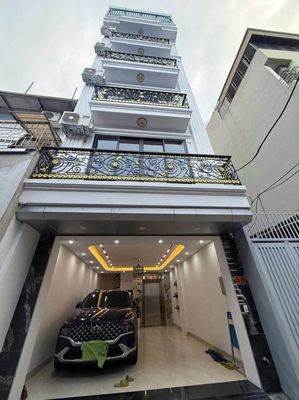
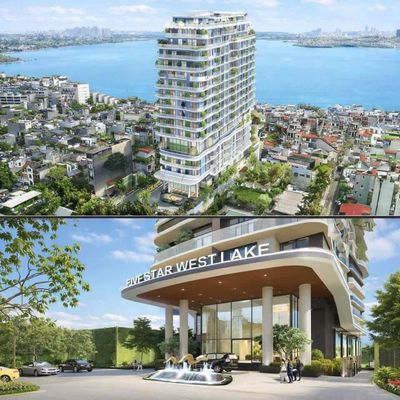
Ciputra Hanoi: median prices by apartment type
| apartment | €157,000 – €781,818 | €2,540/m² | 45 |
| villa | €1.44M – €8M | €15,708/m² | 9 |
| penthouse | €600,000 – €1.08M | €4,750/m² | 2 |
| townhouse | €389,091 – €872,727 | €10,318/m² | 7 |
| house | €307,273 – €3.64M | €10,490/m² | 70 |
Tây Hồ — €472,727 médiane
Ciputra Hanoi on the map
✓ Who Ciputra Hanoi suits
- ✓Families relocating long-term who want on-site or adjacent international schools (UNIS, SIS, HAS)
- ✓Buyers who value an established, multi-decade international community over a brand-new development
- ✓Villa buyers who want a garden and lower density than Hanoi's newer high-rise townships
- ✓Investors targeting long-stay expat tenants rather than short-term rental turnover
- ⚠Buyers who want to walk to the Old Quarter or Hoàn Kiếm Lake — Ciputra is roughly a 20–30 minute drive from the historic centre
- ⚠Buyers prioritising the newest fit-out standards — many towers date from the 2000s–2010s and interiors vary block by block
- ⚠Budget-focused buyers seeking the lowest entry price in Tây Hồ — Ciputra typically commands a premium for its schools and grounds
What buying at Ciputra Hanoi costs on top of the sale price
These are Vietnam's standard national rules for a Hanoi apartment or villa purchase — Ciputra carries no development-specific surcharge. Figures that are not publicly fixed are flagged rather than estimated.
| — | Min | Max | Base |
|---|---|---|---|
| Ownership / land-use rights registration feeDecree 10/2022/ND-CP | 0.5% | 0.5% | % of contract priceBuyer, at Pink Book registration |
| Maintenance fund (apartments only)Not charged on landed villas | 2% | 2% | % of contract price, excl. VATBuyer, at handover of a unit |
| Notary / legal verificationBudget for independent legal counsel alongside the notary | Set by notary fee schedule | Set by notary fee schedule | Per transactionBuyer, typically |
| Seller's personal income taxNot a buyer cost, but shapes resale pricing and your eventual exit | 2% | 2% | % of transfer priceSeller, on a future resale |
Housing Law 2023 · Land Law 2024 · Decree 10/2022/ND-CP
Sources
This page cites the following official texts. Figures on tenure, quota and indicative fees follow our locked legal reference set, cross-checked against these sources as of July 2026.
- Housing Law 2023 (Luật Nhà ở, No. 27/2023/QH15), in force since 1 August 2024.
- Land Law 2024 (Luật Đất đai, No. 31/2024/QH15), in force since 1 August 2024.
- Decree 10/2022/ND-CP on registration fees (cited textually — no verified official URL).
- Circular 92/2015/TT-BTC on personal income tax for real-estate transfers (cited textually — no verified official URL).
Ciputra Hanoi: frequently asked questions
Can foreigners buy an apartment at Ciputra Hanoi?
Yes. Foreign individuals can buy apartments in approved commercial housing projects such as Ciputra Hanoi, under a 50-year tenure renewable once, within the standard 30% foreign-ownership quota that applies per tower.
Can foreigners buy a villa at Ciputra Hanoi, not just an apartment?
Yes, within limits. Foreigners cannot own the underlying land, but can own the house itself in an approved commercial project — capped at 250 houses per ward rather than the 30%-per-tower rule that applies to apartments. Availability against that ward-level cap should always be verified before you commit.
Where exactly is Ciputra Hanoi located?
On the northwest shore of West Lake, across wards in Tây Hồ and Bắc Từ Liêm districts, with main access via Lạc Long Quân street and Ring Road 2 (Võ Chí Công) — roughly 20–30 minutes from the Old Quarter and around 25 minutes from Nội Bài Airport.
Which international schools serve Ciputra Hanoi?
United Nations International School Hanoi (UNIS), Singapore International School (SIS) Ciputra and Hanoi Academy (HAS) are all inside or directly adjacent to the township — a major reason it remains popular with relocating families.
Are Ciputra Hanoi apartments available to rent as well as buy?
Yes — Ciputra has one of Hanoi's deepest long-term rental markets for expats, alongside resale and later-phase purchase opportunities. Current for-sale inventory in the surrounding Tây Hồ area is shown live above.
How old are the buildings at Ciputra Hanoi?
The earliest towers and villas date to the early-to-mid 2000s, with later phases completed into the 2010s — so finish quality and layouts vary meaningfully by block, unlike a single-phase new-build project.
What does it cost to buy at Ciputra Hanoi beyond the sale price?
Budget the standard 0.5% registration fee plus, for apartments, a 2% maintenance fund at handover, on top of notary and legal fees. See the full breakdown above — none of these are Ciputra-specific charges.
Considering a purchase at Ciputra Hanoi?
Our Hanoi desk can walk you through current availability, the foreign-ownership quota at each tower, and how Ciputra compares with Tây Hồ's other townships — get an independent second opinion before you commit.