
Vietnamesische Immobilien verstehen
Due Diligence in Vietnam: Überprüfung des Entwicklers, des Titels und des Projekts
Was bedeutet Due Diligence beim Immobilienkauf in Vietnam?
Die Due Diligence Checkliste
Der Entwickler und seine Unterlagen
4 ✓Bevor Sie eine Reservierungsanzahlung leisten
- Überprüfen Sie die Geschäftsanmeldung des EntwicklersBitten Sie Ihren Anwalt, die Registrierungsnummer mit dem Nationalen Unternehmensregisterportal und dem örtlichen Amt für Planung und Investitionen abzugleichenRed flagKeine überprüfbare Registrierungsnummer oder ein Unternehmen, das erst kürzlich den Namen geändert hat
- Bestätigen Sie die eigene Genehmigung und die Landnutzungsrechte des ProjektsFordern Sie die Investitionsentscheidung und die Baugenehmigung an, die das spezifische Gebäude oder die Phase abdecken, in die Sie investieren möchtenRed flagDer Entwickler kann keine eigene Landnutzungsbescheinigung oder Genehmigungsentscheidung für das Projekt vorlegen
- Prüfen Sie eine gültige Bankgarantie (bảo lãnh) für Off-Plan-EinheitenFragen Sie, welche Geschäftsbank auf der von der Staatsbank von Vietnam genehmigten Liste die Garantie ausgestellt hat, und fordern Sie eine Kopie des Garantiebriefs anRed flagKeine Garantie oder eine Bank, die nicht auf der von der SBV genehmigten Liste bestätigt werden kann
- Überprüfen Sie die Steuer- und Streitgeschichte des Verkäufers bezüglich der EinheitFordern Sie eine schriftliche Bestätigung, dass keine ausstehenden Steuerschulden oder Rechtsstreitigkeiten mit der Immobilie verbunden sindRed flagZurückhaltung bei der Offenlegung oder ein Verkäufer, der die Bestätigung nicht schriftlich geben will
Der Titel, die Quote und die Zoneneinteilung
4 ✓Bevor Sie den Kaufvertrag unterschreiben
- Bestätigen Sie, dass die Identität des Titelinhabers mit dem Verkäufer übereinstimmtVergleichen Sie den Namen im Pink Book (Sổ hồng) mit dem Reisepass oder Ausweis des Verkäufers beim BezirksgrundbuchamtRed flagDer Name des Verkäufers weicht vom auf der Urkunde eingetragenen Namen ab
- Lesen Sie die Felder zur Laufzeit und zum Zweck der LandnutzungPrüfen Sie die auf der Urkunde gedruckten Felder „Thời hạn sử dụng“ (Laufzeit) und „Mục đích sử dụng“ (Nutzungszweck)Red flagEine bereits abgelaufene Laufzeit oder ein angegebener Zweck, der mit Wohneigentum nicht vereinbar ist
- Bestätigen Sie, dass die Ausländerquote des Gebäudes noch Kapazität hatFordern Sie eine schriftliche Bestätigung vom Entwickler oder der Hausverwaltung über die aktuelle Anzahl der Ausländer im Gebäude anRed flagNur eine mündliche Zusicherung, dass „noch Platz ist“
- Bestätigen Sie, dass das Grundstück außerhalb einer Militär- oder nationalen Sicherheitszone liegtLassen Sie Ihren Anwalt die Zoneneinteilung bei der örtlichen Planungsbehörde prüfenRed flagUnklare oder ungewöhnlich eingeschränkte Zoneneinteilung, die niemand erklären kann
Streitigkeiten und Belastungen
3 ✓Die Prüfungen, die eine Titelsuche immer abdecken sollte
- Suchen Sie nach anhängigen Rechtsstreitigkeiten bezüglich des TitelsBeauftragen Sie einen lokalen Anwalt, eine Streitigkeitssuche beim zuständigen Bezirksgericht und Grundbuchamt durchzuführenRed flagJegliche anhängige Forderung auf die Immobilie, egal wie gering sie angeblich ist
- Prüfen Sie, ob eine bestehende Hypothek oder Pfandrecht auf der Urkunde eingetragen istFordern Sie einen aktuellen Auszug vom Grundbuchamt an, der alle eingetragenen Rechte zeigtRed flagEine noch nicht abgelöste Bankhypothek, die noch auf dem Titel eingetragen ist
- Fragen Sie nach Grenz- oder NachbarschaftsstreitigkeitenFordern Sie die Grenzkarte des Vermessers an und sprechen Sie direkt mit der HausverwaltungRed flagUngeklärte Grenzbeschwerden, die bereits registriert sind
Vor-Ort-Inspektion
4 ✓Fertige Einheiten oder ein Besuch der Baustelle bei Off-Plan
- Klopfen Sie Fliesen und Wände mit einer Münze abEin hohler Klang signalisiert schlechte Haftung und wahrscheinlich zukünftige RisseRed flagAusgedehnte hohle Stellen an Böden oder Wänden
- Gießen Sie Wasser auf Badezimmer- und BalkonbödenEs sollte innerhalb weniger Sekunden sauber zum Abfluss fließenRed flagStehendes Wasser, das auf ein Gefälle- oder Abdichtungsproblem hinweist
- Testen Sie jeden Schalter, jede Steckdose und den WasserdruckBringen Sie ein Handy-Ladegerät mit und testen Sie jede Steckdose Raum für RaumRed flagTotale Stromkreise oder zu schwacher Druck, um nutzbar zu sein
- Bei Off-Plan: Besuchen Sie die physische BaustelleVergleichen Sie den sichtbaren Fortschritt mit dem Zahlungsplan, dem Sie folgen sollenRed flagEine Baustelle, die trotz bereits in Rechnung gestellter Zahlungsmeilensteine inaktiv aussieht
Warum Due Diligence wichtig ist und wer sie durchführen sollte
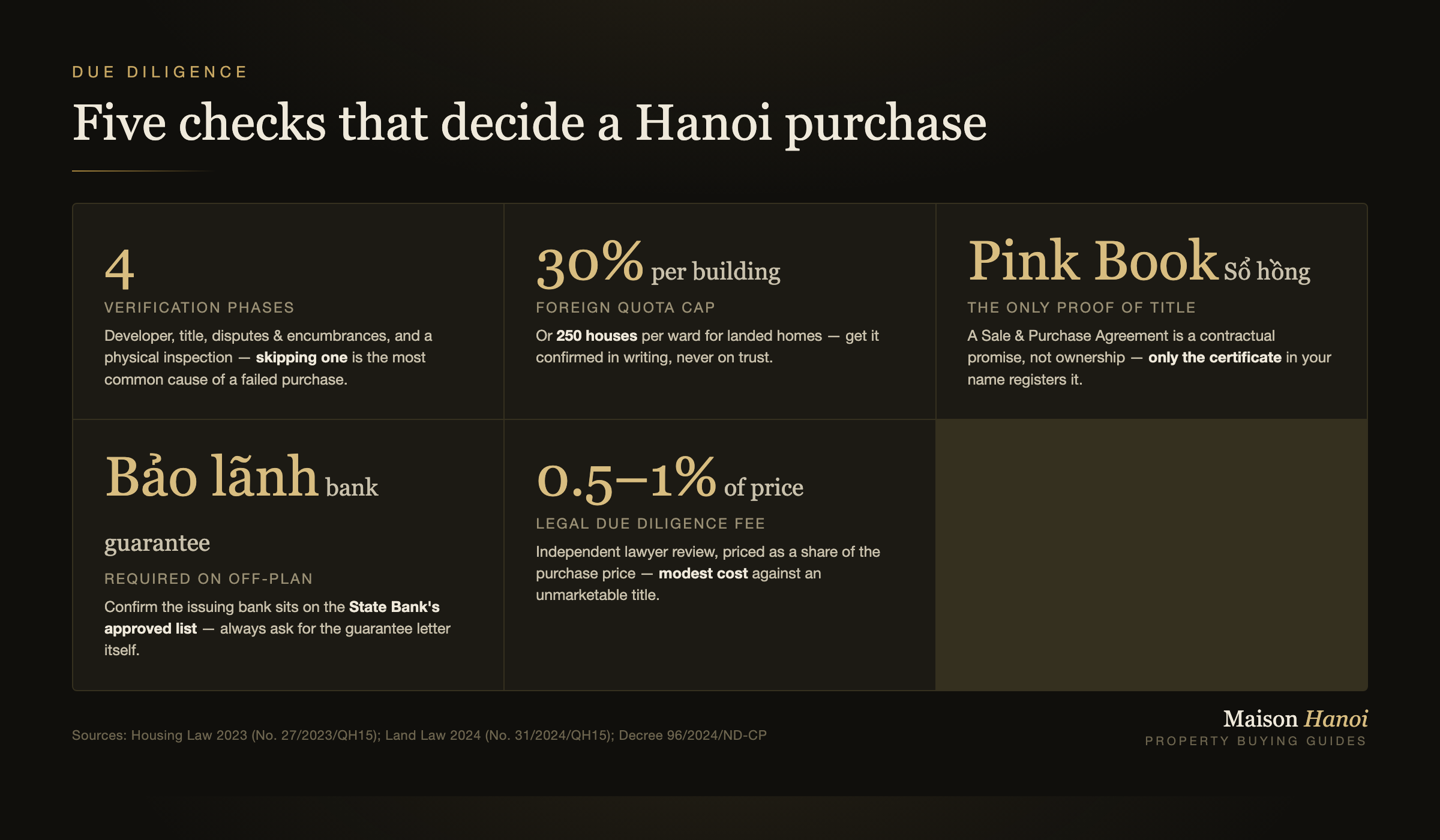
Vietnam erkennt kein Privateigentum an Land an: Was jeder Käufer tatsächlich erwirbt – ob vietnamesischer Staatsbürger oder Ausländer – ist ein Bündel von Landnutzungsrechten, die im Sổ hồng (Pink Book) eingetragen sind. Für einen ausländischen Käufer ist die relevante Urkunde der Nachweis eines Gebäudes mit einer 50-jährigen Laufzeit, einmal verlängerbar, innerhalb eines Projekts, das für Ausländer genehmigt ist. Due Diligence dient dazu, zu bestätigen, dass die Ihnen gezeigte Urkunde echt, aktuell, unbelastet und tatsächlich auf Ihren Namen registrierbar ist – denn ein Kaufvertrag allein ist ein vertragliches Versprechen, kein Eigentumstitel.
In der Praxis wird ein Bezirksgrundbuchamt keine saubere Übertragung abschließen, solange ein Streit oder eine nicht abgelöste Hypothek auf einem Titel lastet, und es kann einen ausländischen Käufer nicht registrieren, wenn die 30%-Quote pro Gebäude oder die 250-Häuser-Begrenzung pro Bezirk bereits erreicht ist. Deshalb ist die obige Checkliste um die vier Punkte herum organisiert, an denen ein Kauf am häufigsten scheitert: ein nicht registrierter oder undurchsichtiger Entwickler, ein Titel, der der Prüfung nicht standhält, ein nicht offengelegter Streit oder Belastung sowie Mängel, die nur bei einer physischen Inspektion sichtbar werden.
Dies ist nicht dafür gedacht, alleine durchgeführt zu werden. Ein zugelassener vietnamesischer Anwalt ist die natürliche Führungsperson für die Unterlagen – Geschäftsanmeldung, Landnutzungsrechte, Streit- und Hypothekensuchen sowie die Prüfung des Kaufvertrags Klausel für Klausel – wobei ein Notar erforderlich ist, wo immer der Vertrag oder eine Vollmacht notariell beglaubigt werden muss, um rechtliche Wirkung zu entfalten. Unabhängige rechtliche Due Diligence wird üblicherweise als Prozentsatz des Kaufpreises und nicht als Pauschalgebühr berechnet, meist im Bereich von 0,5–1 %, was die Tiefe der Titel-, Quoten- und Streitprüfungen widerspiegelt. Für eine physische Inspektion lohnt es sich, neben Ihrem Anwalt einen qualifizierten Bausachverständigen oder einen unabhängigen Inspektionsdienst hinzuzuziehen, insbesondere bei Off-Plan- oder frisch übergebenen Einheiten, bei denen die Bauqualität noch nicht durch jahrelange Nutzung getestet wurde.
Häufig gestellte Fragen
Was entwertet eine Immobilie am meisten bei einer Due Diligence Prüfung?
Ein unklarer oder umstrittener Titel ist der größte Wertvernichter: Eine Immobilie mit einem anhängigen Streit, einer nicht abgelösten Hypothek oder einem Titelinhaber, der nicht mit dem Verkäufer übereinstimmt, kann schwer oder gar nicht sauber registriert werden. Strukturelle Mängel, die bei der Inspektion gefunden werden, und eine fehlende Bankgarantie bei Off-Plan-Einheiten sind die nächstkostspieligsten Entdeckungen.
Wie kann ich einen Immobilienbetrug beim Kauf in Vietnam vermeiden?
Zahlen Sie niemals vor einer unabhängigen Verifizierung: Bestätigen Sie die Registrierung des Entwicklers, die Landnutzungsrechte des Projekts und – bei Off-Plan – eine echte Bankgarantie von einer SBV-gelisteten Bank. Beauftragen Sie einen zugelassenen lokalen Anwalt, verwenden Sie nachvollziehbare Banküberweisungen statt Bargeld und überprüfen Sie die Identität des Pink Book-Inhabers beim Bezirksgrundbuchamt, bevor Sie etwas unterschreiben.
Wie überprüfe ich einen Entwickler vor Vertragsunterzeichnung?
Prüfen Sie die Geschäftsanmeldung des Entwicklers im Nationalen Unternehmensregisterportal, bestätigen Sie, dass das spezifische Projekt eine eigene Genehmigungsentscheidung und Baugenehmigung hat, fragen Sie nach der Lieferhistorie vergangener Projekte und – bei Off-Plan-Verkäufen – fordern Sie den Bankgarantiebrief an. Ein Anwalt kann auch eine Steuer- und Rechtsstreitsuche durchführen.
Was ist eine Bankgarantie (bảo lãnh) und warum ist sie wichtig?
Eine Bankgarantie wird von einer Geschäftsbank auf der von der Staatsbank von Vietnam genehmigten Liste ausgestellt und deckt die Rückzahlung Ihrer Vorauszahlungen ab, falls der Entwickler ein Off-Plan-Projekt nicht liefert. Bestätigen Sie immer die ausstellende Bank und fordern Sie den Garantiebrief selbst an – die Zusicherung des Entwicklers allein ist kein Beweis für deren Existenz.
Wie überprüfe ich, ob ein Pink Book (sổ hồng) vor der Anzahlung gültig ist?
Vergleichen Sie den Namen des Titelinhabers mit dem Reisepass oder der Geschäftsanmeldung des Verkäufers beim Bezirksgrundbuchamt, lesen Sie die Felder zur Laufzeit und zum Zweck der Landnutzung auf der Urkunde und fordern Sie einen aktuellen Auszug an, der bestätigt, dass keine Hypothek oder Pfandrecht darauf eingetragen ist.
Wird die 30%-Ausländerquote im Rahmen der Due Diligence geprüft?
Ja. Fordern Sie eine schriftliche Bestätigung vom Entwickler oder der Hausverwaltung des Gebäudes an, dass die 30%-Ausländerquote pro Gebäude – oder die 250-Häuser-Begrenzung pro Bezirk für Einfamilienhäuser – noch Kapazität hat. Eine mündliche Zusicherung reicht nicht aus: Ist die Quote erreicht, kann kein weiterer Ausländer-Kauf in diesem Gebäude oder Bezirk registriert werden.
Lohnt es sich, einen lokalen Anwalt für Due Diligence zu beauftragen?
Ja. Eine unabhängige rechtliche Prüfung ist Standardpraxis für ausländische Käufer und umfasst genau die oben genannten Prüfungen – Titel, Streitigkeiten, Quote und die Unterlagen des Entwicklers. Sie wird in der Regel als Prozentsatz des Kaufpreises und nicht als Pauschalgebühr berechnet, ein moderater Aufwand im Vergleich zum Risiko eines Titels, der später nicht registriert oder weiterverkauft werden kann.
Quellen
- Wohnungsgesetz 2023 (Luật Nhà ở, Nr. 27/2023/QH15) – Ausländerbesitzlaufzeit und Quote pro Gebäude/Bezirk
- Landgesetz 2024 (Luật Đất đai, Nr. 31/2024/QH15) – Landnutzungsrechtssystem
- Gesetz über Immobiliengeschäft 2023 (Luật Kinh doanh Bất động sản, Nr. 29/2023/QH15) – Pflichten des Entwicklers und der Kaufvertrag
- Dekret 96/2024/ND-CP – Durchführungsbestimmungen, einschließlich der Bankgarantiepflicht bei Off-Plan-Verkäufen
Lassen Sie Entwickler, Titel und Quote prüfen, bevor Sie zahlen
Unser Beratungsbüro in Hanoi führt unabhängige Due Diligence für ausländische Käufer durch – Entwicklerregistrierung, Bankgarantie, Pink Book-Titel und Quotenstatus. Fordern Sie eine Zweitmeinung an, wir antworten innerhalb von 24 Stunden.