
Entender el inmobiliario vietnamita
Rendimiento de alquiler en Hanoi: qué retornos esperar
¿Qué rendimiento de alquiler puedes esperar en Hanoi?
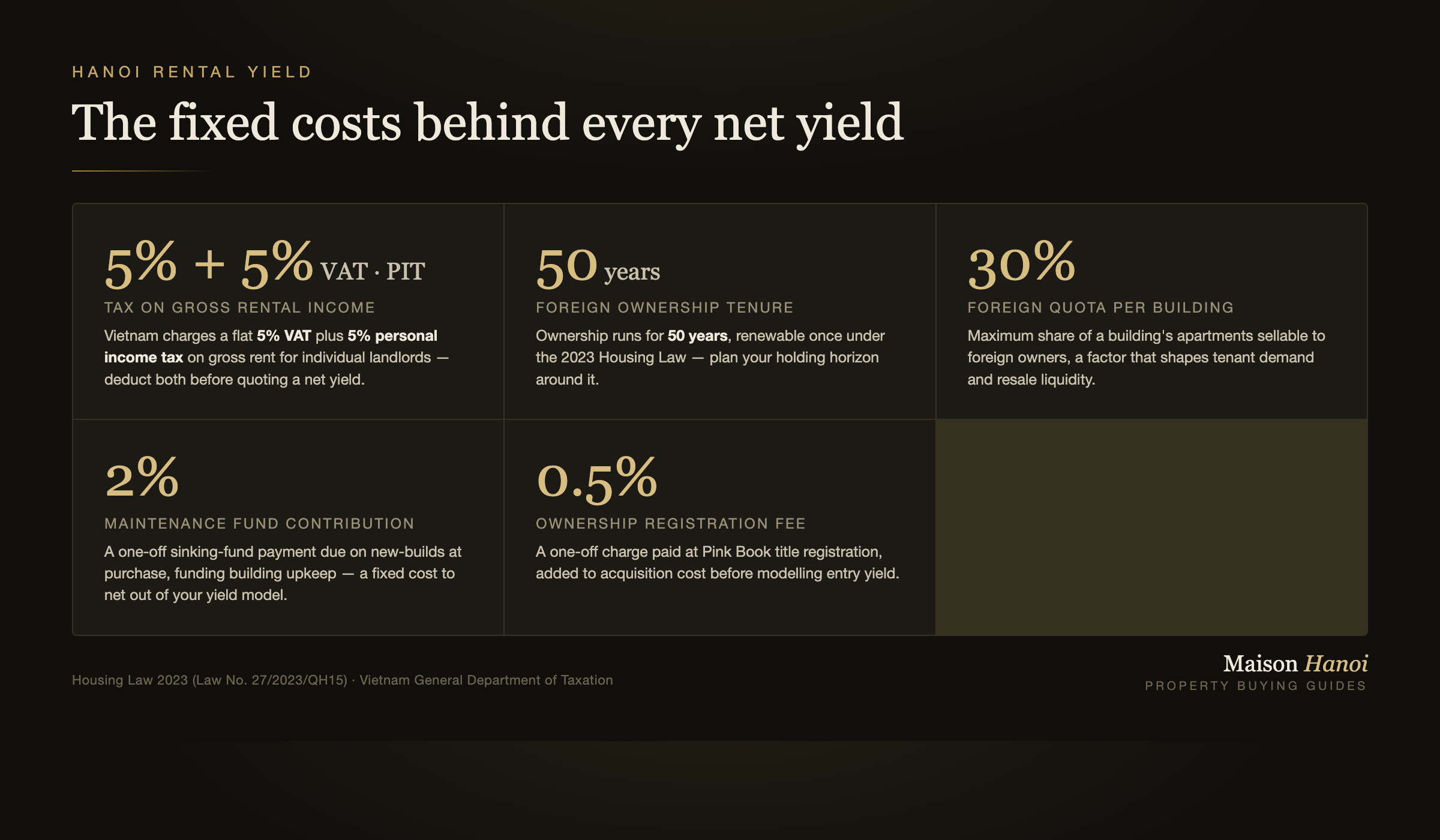
50 años
Duración de la propiedad extranjera
Renovable una vez, según la Ley de Vivienda de 2023
30%
Cuota extranjera por edificio
Porcentaje máximo de apartamentos de un edificio que pueden venderse a propietarios extranjeros
5% + 5%
Impuesto sobre ingresos brutos de alquiler
IVA 5% más impuesto sobre la renta personal 5%, propietarios individuales
0,5%
Tarifa de registro de propiedad
Pagado una vez, al registrar el título
Rendimiento bruto vs rendimiento neto: qué miden realmente los números
El rendimiento de alquiler es simplemente la renta anual que genera una propiedad, expresada como un porcentaje de lo que pagaste por ella. El rendimiento bruto divide la renta anual contratada por el precio de compra y se detiene ahí: ignora todo lo que un propietario realmente paga para mantener la unidad alquilada. El rendimiento neto va más allá: deduce los cargos de gestión y servicios del edificio, una reserva para mantenimiento y mobiliario, los períodos vacíos entre inquilinos, cualquier comisión de agencia de alquiler y el impuesto de Vietnam sobre los ingresos de alquiler antes de dividir por el precio de compra.
Para un propietario extranjero, la diferencia entre ambas cifras rara vez es trivial. Los ingresos por alquiler obtenidos en Vietnam están sujetos al impuesto al valor agregado y al impuesto sobre la renta personal, cada uno aplicado a una tasa fija del 5% sobre la renta bruta para propietarios individuales, un 10% combinado que se aplica independientemente de tu margen de beneficio real, además de cualquier tarifa local de gestión. Un anuncio que muestra un rendimiento bruto puede parecer mucho menos atractivo una vez que se modelan estas deducciones, además de la vacancia realista entre arrendamientos. Al comparar propiedades, siempre pregunta si la cifra citada es bruta o neta y sobre qué período se calculó; la comparación en vivo a continuación refleja rentas solicitadas y logradas actuales, no un promedio histórico fijo.
Considera dos unidades idénticas anunciadas al mismo precio de alquiler: una gestionada profesionalmente con todas las tarifas divulgadas por adelantado, y la otra autogestionada con cargos de servicio irregulares y sin consideración para vacancias. La primera es mucho más probable que entregue el rendimiento anunciado en la práctica. Antes de comparar cualquier dos anuncios, pregunta exactamente qué costos ya refleja el rendimiento citado; una cifra de 'rendimiento' sin una base declarada no es comparable.
Una variable más a planificar: la mayoría de los contratos de arrendamiento residencial en Hanoi se acuerdan en đồng vietnamita, aunque probablemente compraste y piensas en euros. El movimiento de la moneda entre el đồng y tu moneda local afecta tu retorno neto, especialmente si planeas repatriar los ingresos de alquiler en lugar de reinvertirlos localmente, un hecho que vale la pena discutir con tu banco al configurar la ruta de pago para la renta del inquilino.
Qué realmente mueve el rendimiento a través de los distritos y tipos de propiedad de Hanoi
Las diferencias de rendimiento en Hanoi están menos impulsadas por la ciudad en su conjunto y más por quién está alquilando y por qué. Los distritos con una alta concentración de escuelas internacionales, embajadas y personal expatriado con contratos largos — inquilinos que firman arrendamientos de uno o dos años y pagan de manera confiable — tienden a mantener una ocupación más estable que los distritos dependientes de demanda de corta estancia o puramente local. Las nuevas urbanizaciones con servicios en el lugar y gestión profesional del edificio pueden exigir rentas alcanzables más altas en relación con su precio de compra que unidades comparables en bloques antiguos autogestionados, incluso cuando el precio por metro cuadrado anunciado es similar.
El tipo de propiedad importa tanto como la ubicación. Los apartamentos compactos y bien configurados de uno o dos dormitorios generalmente se alquilan más rápido y con menos semanas vacías que grandes villas o áticos ultra lujosos, cuyo grupo de inquilinos es más reducido y cuyos costos de mobiliario y mantenimiento son mayores en términos absolutos. Las unidades amuebladas dirigidas al mercado corporativo expatriado suelen tener una prima de alquiler sobre los alquileres a largo plazo sin amueblar, pero implican un mayor desembolso inicial en mobiliario y un plazo promedio de arrendamiento más corto, un intercambio que vale la pena modelar según tu propio horizonte de tenencia en lugar de asumirlo. Nada de esto reemplaza la verificación de cifras actuales: el desglose en vivo por distrito y tipo de propiedad a continuación se recalcula a partir de listados activos, no se fija en la publicación.
El período de tenencia también influye en el panorama. Una propiedad comprada a un precio de entrada favorable y alquilada de manera constante durante varios años puede ofrecer un rendimiento neto saludable incluso en un distrito donde las cifras principales parecen promedio, mientras que una unidad premium comprada en la cima de un ciclo puede necesitar una tenencia más larga para amortizar sus costos de adquisición. El rendimiento de alquiler es un insumo para la decisión de compra, no la respuesta completa: considérelo junto con las expectativas de apreciación de capital, la liquidez de salida en tu distrito objetivo y tus propios planes para la eventual reventa o ocupación propia.
- Precio medio
- €436.364
- Rango de precios
- €150.000 – €8,36M
- Precio / m²
- €8889/m²
- Superficie
- 60 m²
Qué cuenta para el rendimiento bruto vs rendimiento neto
| Costo o deducción | Incluido en el rendimiento bruto | Incluido en el rendimiento neto |
|---|---|---|
| Renta anual contratada | Sí | Sí |
| IVA sobre ingresos de alquiler (5%) | No | Sí — deducido |
| Impuesto sobre la renta personal por ingresos de alquiler (5%) | No | Sí — deducido |
| Cargo de gestión del edificio / servicio | No | Sí — deducido |
| Comisión de agencia de alquiler o gestión de propiedad | No | Sí — deducido |
| Reserva para mobiliario, mantenimiento y períodos vacíos | No | Sí — deducido |
Preguntas frecuentes
¿Es una buena inversión comprar propiedad en Vietnam?
Puede serlo, para el comprador y horizonte adecuados. Hanoi ofrece propiedad extranjera bajo un certificado renovable de 50 años, una creciente demanda de alquiler expatriada y costos de entrada comparativamente bajos frente a otras capitales del sudeste asiático. Como en cualquier mercado, los retornos dependen del distrito, tipo de propiedad y período de tenencia; trata las cifras de rendimiento publicadas como un punto de partida, modela tu propio retorno neto después de impuestos y tarifas vietnamitas, y busca asesoría independiente antes de comprometerte.
¿Qué país es mejor para comprar para alquilar?
No hay una respuesta única: depende de tu moneda, residencia fiscal, rendimiento objetivo y apetito por la gestión directa. Hanoi compite bien en precio de entrada y demanda de la comunidad internacional, pero cada mercado tiene su propio régimen fiscal, reglas de propiedad y perfil de liquidez. Compara los rangos de rendimiento en vivo de Hanoi con tus otros mercados preseleccionados lado a lado en lugar de confiar en clasificaciones globales genéricas.
¿Cómo calculo el rendimiento de alquiler de un apartamento en Hanoi?
El rendimiento bruto es la renta anual contratada dividida por el precio de compra, expresado como porcentaje. El rendimiento neto resta las tarifas de gestión del edificio, una asignación para mantenimiento y vacancia, cualquier comisión de agencia de alquiler y el 5% de IVA más 5% de impuesto sobre la renta personal de Vietnam sobre los ingresos de alquiler antes de dividir por el precio de compra. Siempre compara cifras netas: el rendimiento bruto solo sobreestima lo que realmente conservas.
¿Cuánto puedo esperar ganar alquilando un apartamento en Hanoi?
La renta alcanzable varía según distrito, calidad del edificio, tamaño y estándar de mobiliario, por lo que no damos una cifra única aquí; consulta el desglose en vivo por distrito y tipo de propiedad arriba para rentas solicitadas y logradas actuales extraídas del mercado activo. Nuestro equipo de asesoría también puede modelar una renta y rendimiento neto realistas para una unidad específica que estés considerando.
¿Se grava el ingreso por alquiler para propietarios extranjeros en Vietnam?
Sí. Los ingresos por alquiler están sujetos a IVA e impuesto sobre la renta personal, cada uno a una tasa fija del 5% sobre la renta bruta para propietarios individuales, pagadero independientemente de tu país de residencia fiscal. Esta es información general, no asesoría fiscal; un contador autorizado puede confirmar las obligaciones de presentación para tu estructura de propiedad específica.
¿Qué afecta más al rendimiento de alquiler en los distritos de Hanoi?
El perfil del inquilino es el mayor impulsor: los distritos con alta demanda de escuelas internacionales, embajadas y corporaciones expatriadas tienden a mantener una ocupación y niveles de renta más estables que las áreas dependientes de inquilinos de corta estancia o puramente locales. La antigüedad del edificio, la calidad de la gestión en el sitio y el tamaño de la unidad también importan: los apartamentos más pequeños y bien configurados generalmente se alquilan más rápido que las unidades grandes o ultra lujosas.
¿Amueblar un apartamento en Hanoi mejora el rendimiento de alquiler?
Las unidades amuebladas dirigidas a inquilinos expatriados suelen tener una prima de alquiler sobre los alquileres a largo plazo sin amueblar, lo que puede aumentar el rendimiento bruto. La compensación es un mayor desembolso inicial en mobiliario, costos continuos de reemplazo por desgaste y, a menudo, arrendamientos promedio más cortos; considera tanto los ingresos adicionales como los costos adicionales en tu rendimiento neto, no solo la renta anunciada.
Fuentes
- Ley de Vivienda 2023 (Ley No. 27/2023/QH15) — regula la duración de propiedad extranjera de 50 años, su renovación única y la cuota del 30% de propiedad extranjera por edificio referenciada en esta guía.
- Departamento General de Impuestos (Tổng cục Thuế) — autoridad oficial para el IVA y el impuesto sobre la renta personal sobre ingresos de alquiler para propietarios individuales en Vietnam.
Obtén una estimación realista de rendimiento para tu propiedad objetivo
Comparte tu presupuesto, lista corta de distritos y tipo de propiedad objetivo; nuestro equipo asesor de Hanoi modelará un rendimiento bruto y neto realista de alquiler y te presentará a gestores inmobiliarios locales verificados.