
Capire l’immobiliare vietnamita
Due diligence in Vietnam: verificare lo sviluppatore, il titolo e il progetto
Cosa significa due diligence quando si acquista un immobile in Vietnam?
La checklist della due diligence
Lo sviluppatore e la sua documentazione
4 ✓Prima di pagare un deposito di prenotazione
- Verifica la registrazione commerciale dello sviluppatoreChiedi al tuo avvocato di controllare il numero di registrazione sul Portale Nazionale della Registrazione delle Imprese e presso il Dipartimento locale di Pianificazione e InvestimentiRed flagNessun numero di registrazione verificabile, o una società che ha cambiato nome da poco
- Conferma l’approvazione del progetto e i diritti di utilizzo del terrenoRichiedi la decisione di investimento e il permesso di costruzione che coprono l’edificio o la fase specifica in cui stai acquistandoRed flagLo sviluppatore non può fornire il certificato di utilizzo del terreno o la decisione di approvazione del progetto
- Controlla la validità della garanzia bancaria (bảo lãnh) sulle unità off-planChiedi quale banca commerciale della lista approvata dalla Banca Statale del Vietnam l’ha emessa e richiedi una copia della lettera di garanzia stessaRed flagNessuna garanzia o una banca che non puoi confermare sia nella lista approvata dalla SBV
- Verifica la storia fiscale e le controversie del venditore sull’unitàRichiedi conferma scritta di assenza di debiti fiscali o contenziosi legati alla proprietàRed flagRiluttanza a fornire informazioni o un venditore che non mette la conferma per iscritto
Il titolo, la quota e la zonizzazione
4 ✓Prima di firmare il Contratto di Compravendita
- Conferma che l’identità del titolare del titolo corrisponda al venditoreConfronta il nome sul Pink Book (Sổ hồng) con il passaporto o documento d’identità del venditore presso l’ufficio catastale distrettualeRed flagIl nome del venditore differisce da quello registrato sul certificato
- Leggi i campi relativi al termine e allo scopo dell’uso del terrenoControlla i campi 'Thời hạn sử dụng' (termine) e 'Mục đích sử dụng' (scopo) stampati sul certificatoRed flagUn termine già scaduto o uno scopo dichiarato incompatibile con la proprietà residenziale
- Conferma che la quota per stranieri dell’edificio ha ancora disponibilitàRichiedi conferma scritta dallo sviluppatore o dal consiglio di gestione dell’edificio sul numero attuale di proprietà straniereRed flagSolo un’assicurazione verbale che 'c’è ancora spazio'
- Conferma che il sito non si trovi in una zona militare o di sicurezza nazionaleFai verificare al tuo avvocato la classificazione della zonizzazione presso l’autorità locale di pianificazioneRed flagStato di zonizzazione poco chiaro o insolitamente restrittivo che nessuno sa spiegare
Controversie e oneri
3 ✓I controlli che una ricerca sul titolo dovrebbe sempre coprire
- Cerca contenziosi pendenti legati al titoloIncarica un avvocato locale di effettuare una ricerca sulle controversie presso il tribunale distrettuale e il registro fondiario competenteRed flagQualsiasi reclamo pendente sulla proprietà, per quanto minore possa essere
- Controlla l’esistenza di ipoteche o vincoli sul certificatoRichiedi un estratto aggiornato dall’ufficio del registro fondiario che mostri tutti gli interessi registratiRed flagUn’ipoteca bancaria non estinta ancora registrata sul titolo
- Chiedi di eventuali controversie sui confini o con i viciniRichiedi la mappa dei confini del geometra e parla direttamente con il consiglio di gestione dell’edificioRed flagReclami sui confini non risolti già registrati
Ispezione in loco
4 ✓Unità completate o visita al cantiere per unità off-plan
- Batti piastrelle e muri con una monetaUn suono vuoto segnala scarsa adesione e probabile futura crepaRed flagZone vuote estese su pavimenti o muri
- Versa acqua sui pavimenti di bagno e balconeDovrebbe defluire pulita verso lo scarico entro pochi secondiRed flagAcqua stagnante, che indica una pendenza o un difetto di impermeabilizzazione
- Testa ogni interruttore, presa e la pressione dell’acquaPorta un caricabatterie per telefono e testa ogni presa stanza per stanzaRed flagCircuiti morti o pressione troppo debole per essere utilizzabile
- Per off-plan: visita il cantiere fisicoConfronta i progressi visibili con il piano di pagamento che ti viene richiesto di seguireRed flagUn cantiere che sembra inattivo nonostante siano già state fatturate le tappe di pagamento
Perché la due diligence è importante e chi dovrebbe eseguirla
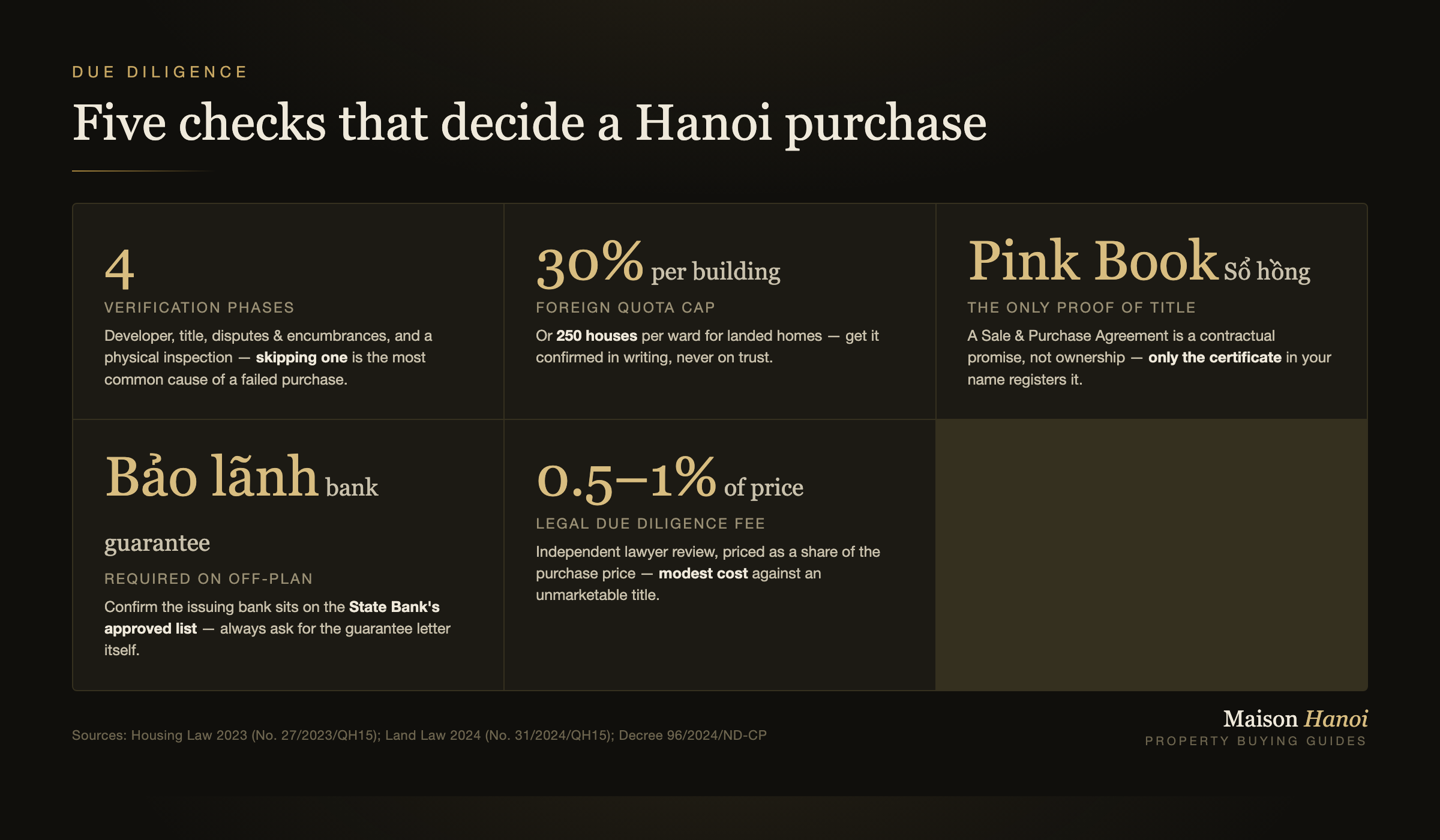
Il Vietnam non riconosce la proprietà privata della terra: ciò che ogni acquirente acquisisce realmente — cittadino vietnamita o straniero che sia — è un insieme di diritti di utilizzo del terreno, registrati sul Sổ hồng, o Pink Book. Per un acquirente straniero, il certificato che conta è la prova di un edificio detenuto con un termine di 50 anni, rinnovabile una volta, all’interno di un progetto approvato per la proprietà straniera. La due diligence serve a confermare che il certificato che ti viene mostrato sia reale, attuale, libero da oneri e effettivamente registrabile a tuo nome — perché un Contratto di Compravendita da solo è una promessa contrattuale, non un titolo.
In pratica, un ufficio catastale distrettuale non completerà un trasferimento pulito mentre una controversia o un’ipoteca non estinta gravano sul titolo, e non può registrare un acquirente straniero una volta che la quota del 30% per edificio — o il limite di 250 case per quartiere — è già piena. Ecco perché la checklist sopra è organizzata intorno ai quattro punti in cui un acquisto fallisce più comunemente: uno sviluppatore non registrato o opaco, un titolo che non regge al controllo, una controversia o onere non dichiarato e difetti che emergono solo durante un’ispezione fisica.
Nulla di tutto ciò è pensato per essere fatto da soli. Un avvocato vietnamita autorizzato è la guida naturale per la documentazione — registrazione commerciale, diritti di utilizzo del terreno, ricerche su controversie e ipoteche, e revisione del Contratto di Compravendita clausola per clausola — con un notaio richiesto ogni volta che il contratto o una procura devono essere notarizzati per avere effetto legale. La due diligence legale indipendente è solitamente quotata come percentuale del prezzo di acquisto piuttosto che come tariffa fissa, comunemente tra lo 0,5% e l’1%, riflettendo la profondità dei controlli su titolo, quota e controversie coinvolti. Per un’ispezione fisica, vale la pena ingaggiare un perito edile qualificato o un servizio di ispezione indipendente insieme al tuo avvocato, specialmente su un’unità off-plan o appena consegnata dove la qualità costruttiva non è ancora stata testata dall’uso pluriennale.
Domande frequenti
Cosa svaluta maggiormente un immobile in un controllo di due diligence?
Un titolo poco chiaro o conteso è il maggior distruttore di valore: un immobile con una controversia pendente, un’ipoteca non estinta o un titolare del titolo che non corrisponde al venditore può essere difficile o impossibile da registrare pulitamente. Difetti strutturali riscontrati durante l’ispezione e l’assenza di garanzia bancaria su unità off-plan sono le scoperte più costose successive.
Come posso evitare una truffa immobiliare acquistando in Vietnam?
Non pagare mai prima della verifica indipendente: conferma la registrazione dello sviluppatore, i diritti di utilizzo del terreno del progetto e — per l’off-plan — una vera garanzia bancaria da una banca elencata dalla SBV. Ingaggia un avvocato locale autorizzato, usa bonifici tracciabili invece di contanti e verifica l’identità del titolare del Pink Book presso l’ufficio catastale distrettuale prima di firmare qualsiasi cosa.
Come verifico uno sviluppatore prima di firmare un contratto?
Controlla la registrazione commerciale dello sviluppatore sul Portale Nazionale della Registrazione delle Imprese, conferma che il progetto specifico abbia la propria decisione di approvazione e permesso di costruzione, chiedi il suo storico di consegne su progetti passati e — per vendite off-plan — richiedi la lettera di garanzia bancaria. Un avvocato può anche effettuare una ricerca fiscale e giudiziaria.
Cos’è una garanzia bancaria (bảo lãnh) e perché è importante?
Una garanzia bancaria è emessa da una banca commerciale nella lista approvata dalla Banca Statale del Vietnam e copre il rimborso dei tuoi pagamenti anticipati se lo sviluppatore non consegna un progetto off-plan. Conferma sempre la banca emittente e richiedi la lettera di garanzia stessa — la sola assicurazione dello sviluppatore non è prova che esista.
Come verifico che un Pink Book (sổ hồng) sia valido prima di pagare un deposito?
Confronta il nome del titolare del titolo con il passaporto o la registrazione commerciale del venditore presso l’ufficio catastale distrettuale, leggi i campi del termine e dello scopo d’uso del terreno sul certificato e richiedi un estratto aggiornato che confermi l’assenza di ipoteche o vincoli attualmente registrati.
La quota del 30% per stranieri viene verificata come parte della due diligence?
Sì. Richiedi conferma scritta dallo sviluppatore o dal consiglio di gestione dell’edificio che la quota del 30% per edificio per stranieri — o il limite di 250 case per quartiere per le abitazioni indipendenti — abbia ancora disponibilità. L’assicurazione verbale non è sufficiente: una volta raggiunto il limite, non si possono registrare ulteriori acquisti stranieri in quell’edificio o quartiere.
Vale la pena assumere un avvocato locale per la due diligence?
Sì. La revisione legale indipendente è prassi standard per gli acquirenti stranieri e copre esattamente i controlli sopra — titolo, controversie, quota e documentazione dello sviluppatore. Generalmente è quotata come percentuale del prezzo di acquisto piuttosto che come tariffa fissa, un costo modesto rispetto al rischio di un titolo che non potrà essere registrato o rivenduto in seguito.
Fonti
- Legge sull’Abitazione 2023 (Luật Nhà ở, No. 27/2023/QH15) — termine di proprietà straniera e quota per edificio/quartiere
- Legge sulla Terra 2024 (Luật Đất đai, No. 31/2024/QH15) — regime dei diritti di utilizzo del terreno
- Legge sul Commercio Immobiliare 2023 (Luật Kinh doanh Bất động sản, No. 29/2023/QH15) — obblighi dello sviluppatore e Contratto di Compravendita
- Decreto 96/2024/ND-CP — regolamenti attuativi, inclusa la richiesta di garanzia bancaria sulle vendite off-plan
Fai controllare lo sviluppatore, il titolo e la quota prima di pagare
Il nostro desk consulenziale di Hanoi esegue due diligence indipendente per acquirenti stranieri — registrazione dello sviluppatore, garanzia bancaria, titolo Pink Book e stato della quota. Richiedi un secondo parere e risponderemo entro 24 ore.