
Vietnamesische Immobilien verstehen
Die 50-Jahres-Eigentumsgrenze: Verlängerung und was danach passiert
Was passiert, wenn die 50-jährige Ausländer-Eigentumsfrist in Vietnam endet?
Verstehen der 50-Jahres-Frist – und Ihre Optionen am Ende dieser Frist
Eine 50-jährige Landnutzungsdauer, kein Eigentum in voller Rechtsfreiheit
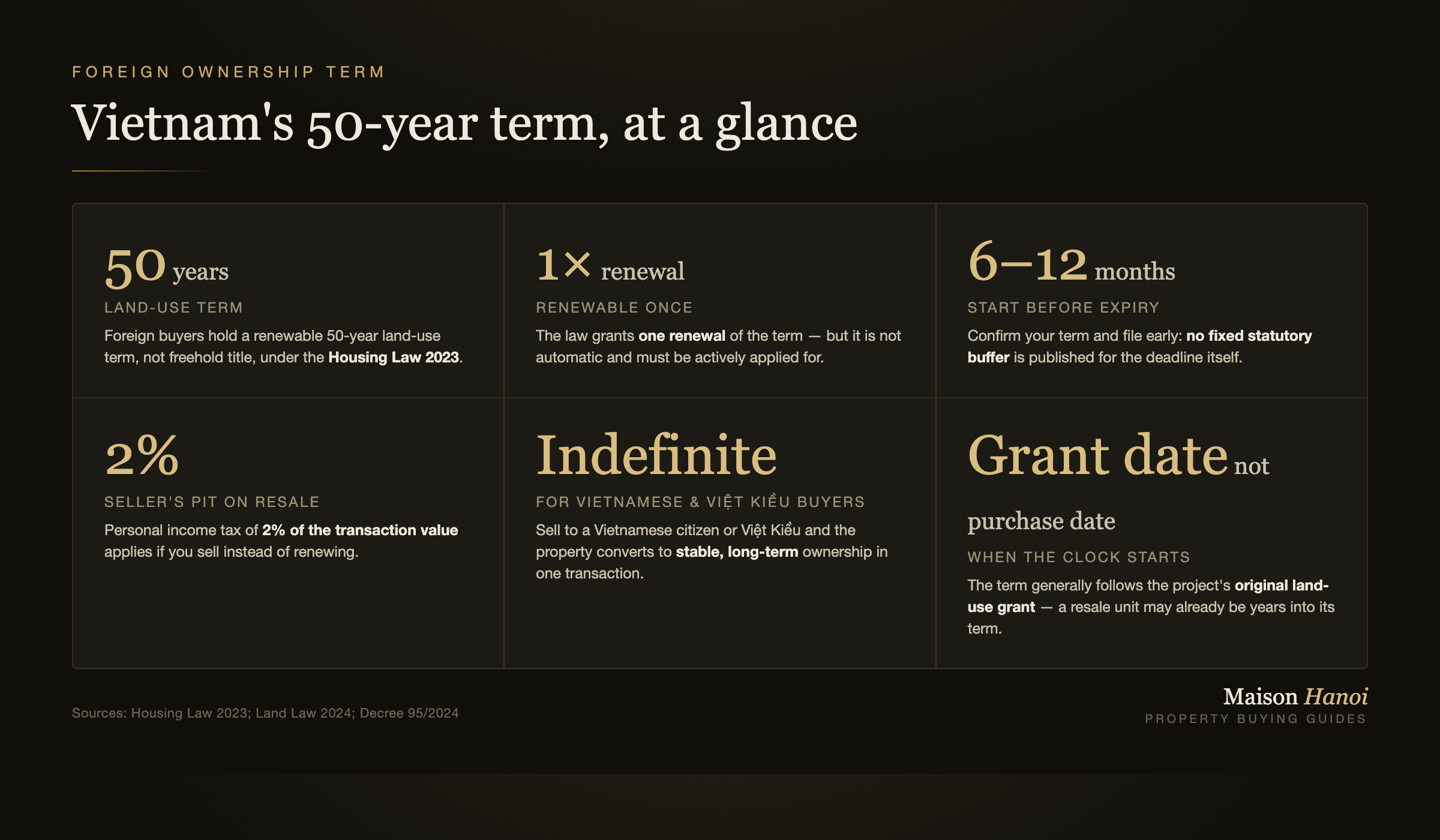
Vietnam gewährt ausländischen Käufern keinen Eigentumstitel in voller Rechtsfreiheit. Wie in unserem Leitfaden zu Vietnams Immobilienrecht für ausländische Käufer dargelegt, gehört sämtliches Land dem Staat, und was ein ausländischer Eigentümer tatsächlich erhält, ist ein Bündel von Landnutzungsrechten an einem Gebäude – einer Wohnung oder einem Haus mit Grundstück innerhalb eines genehmigten kommerziellen Projekts – eingetragen im Pink Book (Sổ hồng) auf seinen Namen. Vietnamesische Staatsbürger halten ihre Wohn-Landnutzungsrechte auf stabiler, praktisch unbefristeter Basis. Für Ausländer legt das Wohnungsgesetz 2023 stattdessen einen festen Horizont fest: eine 50-jährige Eigentumsdauer, einmal verlängerbar. Dieser einzelne Satz ist das Wichtigste, das jeder ausländische Käufer vor der Unterschrift verstehen sollte – alles andere hier dient dazu, vernünftig um diese Regelung herum zu planen.
Warum die Frist die Käufer heute selten beunruhigt
In der Praxis ist der 50-jährige Countdown weniger beunruhigend als es klingt. Die meisten Wohnprojekte, die ausländischen Käufern in Hanoi offenstehen, sind neu, gebaut und verkauft unter einem Rechtsrahmen, der sich erst im letzten Jahrzehnt entwickelt hat und durch das aktuelle Wohnungsgesetz 2023 und das Dekret 95/2024 erneut aktualisiert wurde. Für einen heutigen Käufer ist der Ablauf meist eine Angelegenheit der nächsten Generation, nicht des nächsten Jahrzehnts. Wichtiger ist es, genau zu wissen, wann Ihre eigene Frist beginnt: Die Laufzeit wird in der Regel ab der ursprünglichen Landnutzungsgenehmigung des Projekts berechnet, nicht ab Ihrem persönlichen Kaufdatum. In einer großen Siedlung, die in Phasen gebaut wurde, können zwei Gebäude unterschiedliche Startdaten – und damit unterschiedliche Restlaufzeiten – haben, obwohl sie nebeneinander stehen. Lesen Sie immer das Feld 'Thời hạn sử dụng' (Landnutzungsdauer) in Ihrem eigenen Pink Book, anstatt von 50 Jahren ab Kaufdatum auszugehen, besonders bei einer Wiederverkaufseinheit, die möglicherweise schon einige Jahre ihrer Laufzeit hinter sich hat.
Wenn Sie nicht verlängern: was tatsächlich passiert
Die Verlängerung erfolgt nicht automatisch. Das vietnamesische Recht berechtigt ausländische Eigentümer, eine einmalige Verlängerung zu beantragen, aber dieses Recht muss ausgeübt werden – niemand verlängert es für Sie. Das Verfahren und die erforderlichen Unterlagen werden von der örtlichen Landbehörde fallweise angewandt, und Vietnams Rahmen für ausländisches Eigentum ist in der Praxis noch vergleichsweise jung, sodass der Verwaltungsweg noch nicht so routiniert oder etabliert ist wie etwa eine erstmalige Pink Book-Registrierung. Diese Kombination – ein Anspruch, der aktiv geltend gemacht werden muss, und ein Verfahren, das sich noch einspielt – macht die Frist selbst zum eigentlichen Risiko, weit mehr als die letztliche Verlängerungsentscheidung. Käufer, die Schwierigkeiten bekommen, werden selten komplett abgelehnt; es sind diejenigen, die den Termin verstreichen lassen, ohne überhaupt einen Antrag zu stellen. Bauen Sie die Erinnerung rechtzeitig in Ihren Kalender ein und betrachten Sie die Überprüfung Ihrer Frist durch einen Anwalt als routinemäßige Sorgfaltspflicht lange bevor der Ablauf dringend wird.
Verkauf vor Ablauf: die praktische Alternative
Die Verlängerung ist nicht der einzige Weg. Der Verkauf vor oder zum Ende der Frist ist eine bewährte Ausstiegsstrategie und verändert das Eigentumsbild vollständig, wenn der Käufer ein vietnamesischer Staatsbürger oder ein Việt Kiều (überseeischer Vietnamese) ist, die nicht an die ausländische 50-Jahres-Grenze gebunden sind und ihre Rechte auf derselben stabilen, langfristigen Basis wie jeder ansässige Bürger halten. Effektiv verwandelt der Verkauf an einen Bürger oder Việt Kiều eine Immobilie in einem einzigen Geschäft von einem laufzeitbegrenzten ausländischen Eigentum in ein unbefristetes. Der Verkauf an einen anderen berechtigten ausländischen Käufer ist ebenfalls möglich, innerhalb der Ausländerquote des Gebäudes, wobei es ratsam ist, mit einem Anwalt zu klären, ob die verbleibende Laufzeit unverändert übernommen wird oder beim Wiederverkauf anders behandelt wird, anstatt es anzunehmen. In jedem Fall fällt beim Wiederverkauf eine persönliche Einkommensteuer von 2 % des Transaktionswerts an, wie bei jedem Verkauf durch einen ausländischen Eigentümer. Die vollständigen Abläufe – Dokumente, Steuern und Zeitplanung – erläutern wir in unserem Leitfaden zum Verkauf Ihrer Immobilie in Hanoi als Ausländer.
Wie die Verlängerung Schritt für Schritt funktioniert
⏱ Beginnen Sie 6–12 Monate vor Ablauf Ihrer Frist
Die Verlängerung selbst ist ein formeller Antrag, keine Formalität. Beginnen Sie den Prozess rechtzeitig vor Ablauf der Landnutzungsdauer in Ihrem Pink Book.
- 1
Bestätigen Sie Start- und Ablaufdatum Ihrer Frist
⏱ Laufend – prüfen Sie vor dem Kauf und erneut rechtzeitig vor Ablauf
Lesen Sie das Feld 'Thời hạn sử dụng' (Landnutzungsdauer) in Ihrem Pink Book, anstatt es anzunehmen – das Datum ist an die Landnutzungsgenehmigung des Projekts gebunden, nicht an Ihren persönlichen Kaufzeitpunkt.
⚠Gehen Sie nicht davon aus, dass jede Einheit in einer großen Siedlung dasselbe Ablaufdatum hat.
- 2
Bestätigen Sie, dass Sie weiterhin die Eigentumsbedingungen erfüllen
⏱ Einige Wochen
Die Verlängerung steht ausländischen Eigentümern offen, die weiterhin die vom Wohnungsgesetz 2023 festgelegten Bedingungen für ausländisches Eigentum erfüllen – einen gültigen Reisepass und die fortbestehende Berechtigung zum Besitz der Immobilie.
DocumentsPink Book · Reisepass
- 3
Reichen Sie Ihren Verlängerungsantrag bei der Landbehörde ein
⏱ Vor Ablauf – es gibt keine festgelegte gesetzliche Frist, daher ist eine frühzeitige Antragstellung der sicherste Weg
Stellen Sie den Antrag vor Ablauf der Frist bei der örtlichen Landregistrierungsstelle. Dies ist der Schritt, den man am leichtesten zu spät angeht – der Anspruch besteht, muss aber aktiv ausgeübt werden.
⚠Die Verlängerung erfolgt nicht automatisch; eine Frist, die ohne Antrag verstreicht, ist das zentrale Risiko in diesem gesamten Prozess.
- 4
Erhalten Sie Ihr aktualisiertes Pink Book
⏱ Wochen bis Monate, abhängig vom örtlichen Landamt
Nach Genehmigung stellt die Landbehörde eine aktualisierte Bescheinigung mit der verlängerten Frist aus. Nur das geänderte Pink Book ist der Nachweis, dass die Verlängerung wirksam geworden ist.
Häufig gestellte Fragen
Wie lange kann man als Ausländer in Vietnam Eigentum besitzen?
Ausländer halten Eigentum für eine 50-jährige Landnutzungsdauer, einmal verlängerbar, an Gebäuden innerhalb von kommerziellen Projekten, die für ausländisches Eigentum genehmigt sind – niemals am Land selbst. Vietnamesische Staatsbürger und Việt Kiều halten ihre Rechte im Vergleich dazu auf stabiler, praktisch unbefristeter Basis. Prüfen Sie immer das Startdatum Ihrer eigenen Frist im Pink Book.
Wie lange kann man ein Haus in Vietnam besitzen?
Die gleiche 50-jährige, einmal verlängerbare Frist gilt für Häuser mit Grundstück wie für Wohnungen, sofern das Haus in einem für ausländisches Eigentum genehmigten Projekt liegt und innerhalb der Quote von 250 Häusern pro Bezirk. Der Kauf von Land selbst oder eines Hauses außerhalb eines genehmigten Projekts ist für Ausländer überhaupt nicht möglich.
Was benötige ich, um meine Eigentumsfrist zu verlängern?
Sie benötigen Ihr aktuelles Pink Book, einen gültigen Reisepass und die Bestätigung, dass Sie weiterhin die Bedingungen des Wohnungsgesetzes 2023 für ausländisches Eigentum erfüllen, eingereicht bei der örtlichen Landbehörde vor Ablauf Ihrer Frist. Das Verfahren wird fallweise angewandt – eine Überprüfung durch einen Anwalt vor Antragstellung wird dringend empfohlen.
Kann ich eine Eigentumswohnung in Vietnam für immer besitzen?
Nicht direkt als Ausländer – das Eigentum ist auf 50 Jahre begrenzt, einmal verlängerbar. Die Immobilie kann effektiv in unbefristetes, stabiles Eigentum übergehen, wenn Sie sie später an einen vietnamesischen Staatsbürger oder einen Việt Kiều verkaufen, die nicht an dieselbe ausländische Frist gebunden sind.
Was passiert, wenn die Frist abläuft, bevor ich die Verlängerung beantrage?
Das vietnamesische Recht gewährt ausländischen Eigentümern das Recht auf eine Verlängerung, aber dieses Recht muss aktiv geltend gemacht werden – es wird nicht automatisch verlängert. Das Verstreichenlassen der Frist ohne Antragstellung ist das eigentliche Risiko in diesem Prozess, weshalb wir empfehlen, die Überprüfung mit einem Anwalt lange vor Ablauf zu beginnen.
Kann ich meine Immobilie verkaufen, bevor die 50-Jahres-Frist abläuft?
Ja – der Verkauf vor oder zum Ablauf ist ein bewährter Ausstiegsweg und bei ausländischen Eigentümern, die sich dem Meilenstein nähern, gängige Praxis. Eine persönliche Einkommensteuer von 2 % des Transaktionswerts fällt an, wie bei jedem Wiederverkauf durch einen ausländischen Eigentümer.
Bekommt man bei Kauf einer Wiederverkaufswohnung weniger Zeit bis zum Fristablauf?
Oft ja. Die 50-Jahres-Frist ist in der Regel an die ursprüngliche Landnutzungsgenehmigung des Projekts gebunden und nicht an Ihr Kaufdatum, sodass eine Wiederverkaufseinheit möglicherweise schon Jahre ihrer Frist hinter sich hat. Prüfen Sie das Feld zur Landnutzungsdauer im Pink Book des Verkäufers, bevor Sie sich verpflichten.
Quellen
- Wohnungsgesetz 2023 (Luật Nhà ở, Nr. 27/2023/QH15) – legt die Ausländer-Eigentumsfrist, das Verlängerungsrecht und die Berechtigungsbedingungen fest.
- Landgesetz 2024 (Luật Đất đai, Nr. 31/2024/QH15) – regelt Landnutzungsrechte und das Registrierungsverfahren der örtlichen Landbehörden.
- Dekret 95/2024/ND-CP – detaillierte Durchführungsbestimmungen zum Wohnungsgesetz 2023 (derzeit keine offizielle englischsprachige URL veröffentlicht; nur als Referenz zitiert).
- Generaldirektion für Steuern (Tổng cục Thuế) – persönliche Einkommensteuer auf Immobilienübertragungen durch ausländische Eigentümer.
Bestätigen Sie Ihre Frist, bevor es dringend wird
Unser Beratungsdesk in Hanoi prüft kostenlos und unverbindlich die Landnutzungsdauer in Ihrem Pink Book, Ihre Verlängerungsberechtigung und Ihre Ausstiegsoptionen. Fordern Sie eine unabhängige Zweitmeinung an; wir antworten innerhalb von 24 Stunden.